Hakluyt Society publications
Discussions by authors and independent reviews of books published by the Hakluyt Society and distributed to Society members
Encounters with the Querina
My first encounter with the Querina was entirely serendipitous. At the time, I was completing a research project on the Italian translation of the Book of John Mandeville, the account of the infamous fourteenth-century ‘English knight’ who claimed to have travelled to Jerusalem and throughout the exotic East. Working in a small, regional Italian library, I called up an early fifteenth-century manuscript of the Book. When the volume arrived, I was surprised to find that it also contained another text, written in the same neat hand. It told the incredible story of the Querina, a Venetian merchant ship which was sailing from Crete to Flanders in 1431 when it was [...]
Read More
Cosmopolitan Convicts? 19th-century convicts in Bermuda and Gibraltar
In this post, I apply the concept of cosmopolitanism to an unusual group of people: convicts. More than 12,000 British and Irish male convicts were transported to the British penal colonies of Bermuda and Gibraltar between 1824-75. During the day convicts worked on the Royal Naval dockyards, mostly quarrying and transporting stone for building projects, and were shut up at night on prison hulks or on-shore barracks. To what extent did the ‘cosmopolitanism’ of these naval hubs shape the convicts’ ‘ways of being in the world’? Were convicts included in the bustling, mixed social worlds of these port-cities, or were they segregated? To answer, these questions, I refer to texts [...]
Read More
Music-making, Hakluyt and Early Modern Travel Knowledge
Thomas Weelkes’s (1576-1623) anonymously-authored bipartite madrigal for six voices, “Thule, the period of cosmographie” (1600), paints a scene of strange spectacle complete with merchants from far off places, ‘flying fishes’, treasures and goods from abroad, foreign islands, exotic volcanoes and other wonders of exploration of the known world: Thule, the period of Cosmographie, Doth vaunt of Hecla, whose sulphureous fire Doth melt the frozen Clime, and thaw the Skie; Trinacrian Ætna’s flames ascend not higher: These things seem wondrous, yet more wondrous I, Whose hart with feare doth freeze, with love doth fry. The Andalusian Merchant, that returnes Laden with cutchinele and China dishes, Reports in Spaine how strangely Fogo [...]
Read More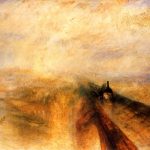
Coming from afar
As an historian of travel, I have looked at railway passengers' experiences of distance. But what was the meaning of distance for the people along the tracks, as they observed the machines carrying those passengers thundering past? An important painting from the 1880s addresses precisely this question. 'Il vient de loin' - he/it comes from afar - by Dutch impressionist Paul Joseph Constantin Gabriël has at least three things to say about distance. Paul Joseph Constantin Gabriël, 'Il vient de loin' 1) This painting problematizes progress. Many visual and literary artworks of the nineteenth century set up a dichotomy between tradition and progress, between nature and technology, between a supposedly [...]
Read More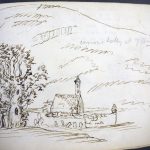
A 19th-Century Perspective on Ireland – following in the footsteps of John (Fiott) Lee
In July 1806, John Lee set out from London to Holyhead where, four weeks later, he boarded the packet to Dublin. Over the following six months, he walked hundreds of miles, filling five notebooks and three sketchbooks with on-the-spot observations and illustrations. ‘Curious holly at 7 Churches [Glendalough]’. By John Lee, 11 September 1806 (SJC, MS U.30 (6), f. 62r). By permission of the Master and Fellows of St John’s College, Cambridge. Born John Fiott in 1783, the son of John Fiott, a merchant, and Harriet Lee of Hartwell, Buckinghamshire, from 1815 he assumed the surname Lee to fulfil the requirements of an inheritance. I refer to him by that [...]
Read More
The voyage of Captain John Narbrough to the Strait of Magellan and the South Sea in his Majesty’s Ship Sweepstakes 1669-1671
In May 1669 Captain John Narbrough was appointed to command HMS Sweepstakes for a voyage to the West Indies, Shortly thereafter an adventurer who has gone down in history as Don Carlos (he gave different versions of his name, nationality and accounts of his life to virtually everyone with whom he came in contact) submitted a proposal to King Charles II for a voyage to South America with an apparent view to establishing trading relation with the native inhabitants and stirring up a rebellion against the Spanish authorities. The King, having had this proposal investigated, agreed to sending a frigate with a pink in company on a voyage of discovery with [...]
Read More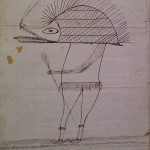
Messy Lives on the Upper Guinea Coast: The Church Missionary Society and its Representatives
When I first began to explore the correspondence of the various Church Missionary Society’s agents in Sierra Leone during the summer of 2011, I confess that I knew very little about them. I was primarily conducting research about how body marks and identity were connected, and was hoping to find evidence of drawn or described body marks such as tattoos and scarification. Missionary accounts seemed like a good place to begin, but as it happened, I never did find descriptions of scarification or tattoo. What I found were lives. And as I read further, researching the authors and working to reconstruct the trajectories of their pupils, I realized how fascinating, [...]
Read More
Hakluyt Society Editorial Workshop: A Report by Captain Mike Barritt
Present-Day Toponymy To start, editors should refer to official publications produced by the relevant national authority or a dependable derived publication. In the maritime sphere charts and sailing directions are produced in hard and soft copy by many Hydrographic Offices. Details can be found online using a standard search engine. The Office of Coast Survey makes all charts of domestic US waters available for download online. This is exceptional. A useful online source, analogous to Google Maps and Earth, is the website of Navionics, where the Chart Viewer allows access to digital charting of most areas. The toponymy on this site will reflect usage of the contiguous state. The best source [...]
Read More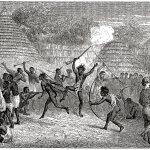
Grant, the Nile Expedition and Colonisation
In the early twenty-first century, much popular and academic opinion tends to roundly condemn anything to do with Britain’s past activities in overseas regions as ‘imperialism’ or ‘colonialism’. These activities are, by definition, reprehensible exploitation of non-Western peoples. It is not politically correct to write about the so-called exploiters. An explorer like Grant is clearly, it is supposed, part of the exploitation processes. His ‘false modesty’ and ‘false philanthropy’ must be exposed. Hence, to give only one example, what I believe was intended as a little joke to be played on Grant by his companion Speke, has been interpreted by post-colonial writers and commentators as an assertion of cultural superiority [...]
Read More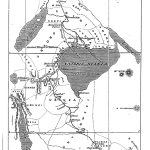
‘A Walk Across Africa’: The Nile Source Problem
When, in 1860, the Royal Geographical Society decided to send Speke and Grant to search for the source of the world’s longest river, the Nile, they were asking the two men to settle not only a series of arguments and disputed information which had arisen during the 1850s, but also arguments and speculations which had interested the learned world for over two thousand years or more. The immediate problem was that the RGS, founded in 1830, had become a powerful almost quasi-official institution keen to garner accurate geographical information but also perhaps to use that information in the service of especially British overseas interests. A knowledge base would be provided [...]
Read More