Posts from Hakluyt Society authors, editors, series editors and grant recipients
Interesting background stories from the research work of Hakluyt Society authors, editors, series editors and grant recipients
Messy Lives on the Upper Guinea Coast: The Church Missionary Society and its Representatives
When I first began to explore the correspondence of the various Church Missionary Society’s agents in Sierra Leone during the summer of 2011, I confess that I knew very little about them. I was primarily conducting research about how body marks and identity were connected, and was hoping to find evidence of drawn or described body marks such as tattoos and scarification. Missionary accounts seemed like a good place to begin, but as it happened, I never did find descriptions of scarification or tattoo. What I found were lives. And as I read further, researching the authors and working to reconstruct the trajectories of their pupils, I realized how fascinating, [...]
Read More
Hakluyt Society Editorial Workshop: A Report by Captain Mike Barritt
Present-Day Toponymy To start, editors should refer to official publications produced by the relevant national authority or a dependable derived publication. In the maritime sphere charts and sailing directions are produced in hard and soft copy by many Hydrographic Offices. Details can be found online using a standard search engine. The Office of Coast Survey makes all charts of domestic US waters available for download online. This is exceptional. A useful online source, analogous to Google Maps and Earth, is the website of Navionics, where the Chart Viewer allows access to digital charting of most areas. The toponymy on this site will reflect usage of the contiguous state. The best source [...]
Read More
Grant, the Nile Expedition and Colonisation
In the early twenty-first century, much popular and academic opinion tends to roundly condemn anything to do with Britain’s past activities in overseas regions as ‘imperialism’ or ‘colonialism’. These activities are, by definition, reprehensible exploitation of non-Western peoples. It is not politically correct to write about the so-called exploiters. An explorer like Grant is clearly, it is supposed, part of the exploitation processes. His ‘false modesty’ and ‘false philanthropy’ must be exposed. Hence, to give only one example, what I believe was intended as a little joke to be played on Grant by his companion Speke, has been interpreted by post-colonial writers and commentators as an assertion of cultural superiority [...]
Read More
‘A Walk Across Africa’: The Nile Source Problem
When, in 1860, the Royal Geographical Society decided to send Speke and Grant to search for the source of the world’s longest river, the Nile, they were asking the two men to settle not only a series of arguments and disputed information which had arisen during the 1850s, but also arguments and speculations which had interested the learned world for over two thousand years or more. The immediate problem was that the RGS, founded in 1830, had become a powerful almost quasi-official institution keen to garner accurate geographical information but also perhaps to use that information in the service of especially British overseas interests. A knowledge base would be provided [...]
Read More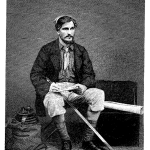
Introducing the Hakluyt Society Edition of Grant’s Walk across Africa
The latest Hakluyt Society publication, 'A Walk Across Africa: J.A. Grant's Account of the Nile Expedition of 1860-1863', edited by Roy Bridges, has now been distributed to members. In a series of blog posts, Professor Bridges, a past president of the Society and expert of African history, shines his light on the new volume. In this first post he tells about his own 60-year engagement with the Speke and Grant Nile Expedition which eventually led to his remarkable and beautifully-illustrated Hakluyt Society edition. I first became acquainted with the story of the Speke and Grant Nile Expedition of 1860-63 when I began research on the history of the Expedition’s sponsor, the [...]
Read More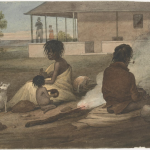
2017 Hakluyt Society Essay Prize winner: Neither “Middle Ground” nor “Native Ground”: Reading the Life of Goggey, an Aboriginal Man on the Fringes of Early Colonial Sydney
The Hakluyt Society is pleased to announce that its 2017 Essay Prize has been awarded to Annemarie McLaren, a doctoral candidate at the Australian National University, Canberra. As runner-up in this year's competition, an Honourable Mention is awarded to Cameron B. Strang (University of Nevada, Reno, USA), for his essay: "Coacoochee's Borderlands. A Native American Explorer in Nineteenth-Century North America". Annemarie McLaren will be awarded a cash prize of £750 for her winning essay. Both the winner and runner-up will also receive one-year free membership of the Society. In this blog post, McLaren reflects upon the research that went into her prize-winning essay, "Neither 'Middle Ground' nor 'Native Ground': Reading the life of Goggey, [...]
Read More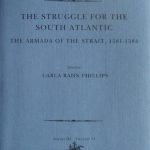
The Armada of the Strait, 1581-1584: Disastrous beginnings of an ill-fated enterprise
Tuesday, the 3rd of October [1581], the eve of San Francisco, when we had sailed about 35 leagues from San Lucar, there began to be such strong wind from the south and south-west, with much shifting of the cargo, and things looked bad, so that it was indispensable that the armada take down its sails and heave to, until Friday, the 6th of the aforesaid, when the weather had such force that the galeaza capitana had to jettison some things, which was done. And the weather worsened so much on this day that eight navios from the armada could not be seen. And the next day, Saturday the 7th, we [...]
Read More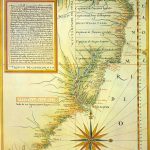
Personal conflict in the Armada of the Strait: Sarmiento versus Flores
An interview with Professor Carla Rahn Phillips, editor and translator of the Hakluyt Society's 2016 volume The Struggle for the South Atlantic: The Armada of the Strait, 1581-84. To start, could you say something about the personal conflict at the heart of the Armada of the Strait? CRP: Like any large enterprise, the Armada of the Strait was bound to have a range of personalities and a certain amount of disagreement and friction among its participants. Nonetheless, one ongoing clash all but defined the Armada of the Strait: the enmity between Pedro Sarmiento, governor-designate of the colony to be planted at the Strait, and Don Diego Flores de Valdés, captain general [...]
Read More
2016 Hakluyt Society Volume: The Struggle for the South Atlantic: The Armada of the Strait, 1581-84
In this first of three blog posts, Professor Phillips introduces The Struggle for the South Atlantic . The Armada of the Strait under Don Diego Flores de Valdés in 1581–4 came at a crucial juncture in global politics. Philip II of Spain had assumed the crown of Portugal and its overseas empire, and Francis Drake’s daring peacetime raids had challenged the dominance of Spain and Portugal in the Americas. Drake’s attacks had demonstrated the vulnerability of both Spanish and Portuguese colonies, and intelligence reports indicated that other English adventurers hoped to replicate Drake’s successful melding of trade and plunder. It was clear to Philip and his councillors that something had to [...]
Read More
Abraham Lawse (c.1559-1613) – Case Study of a Tudor-Stuart Shipmaster
When I was working on my PhD dissertation on the social history of Elizabethan seamen in the 1990s, I spent a great deal of time combing through High Court of the Admiralty cases, parish records, wills, and whatever else might yield information about the personal and professional lives of late Tudor seafarers. The highest-ranking men in the English maritime community were the most likely to leave a paper trail in the historical records, affording researchers the opportunity to “meet” them at various junctures of their lives: shipmaster Abraham Lawse (c. 1559-1613) was one such man. I first encountered Lawse in parish records from 1584, when he was a young man getting married [...]
Read More