Freshest Advices From Barbary: News & Information Flows between Restoration Britain & the Maghreb – 2021 winner of the Hakluyt Society Essay Prize
These newspapers presented to British audiences a view of Maghrebi diversity, and diplomatic relations with Europe free of anti-Maghrebi rhetoric.
By Nat Cutter, University of Melbourne
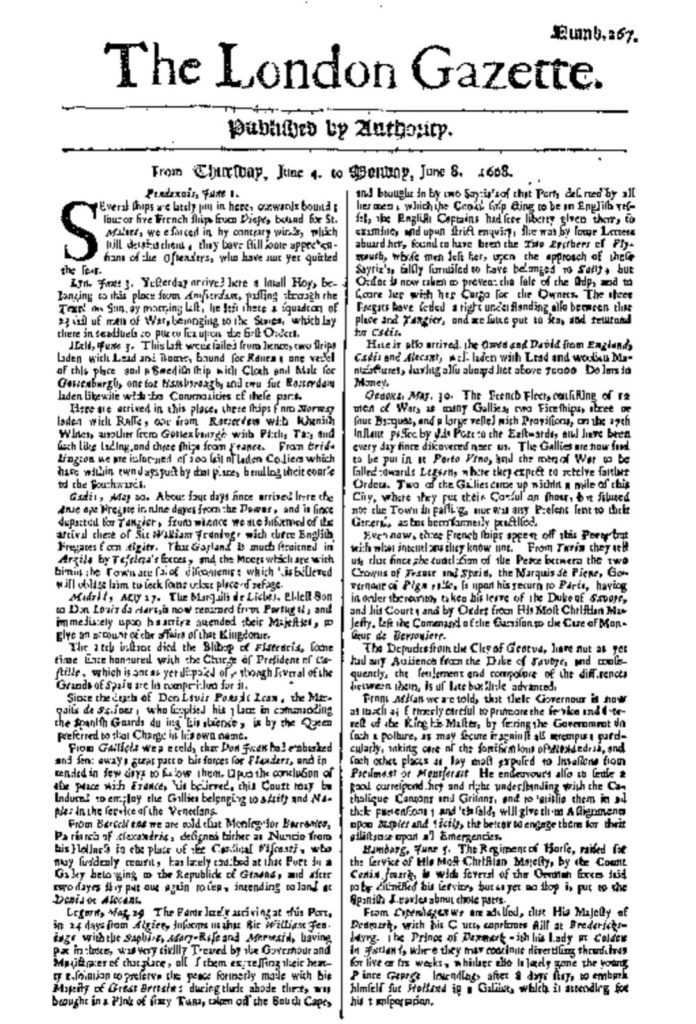
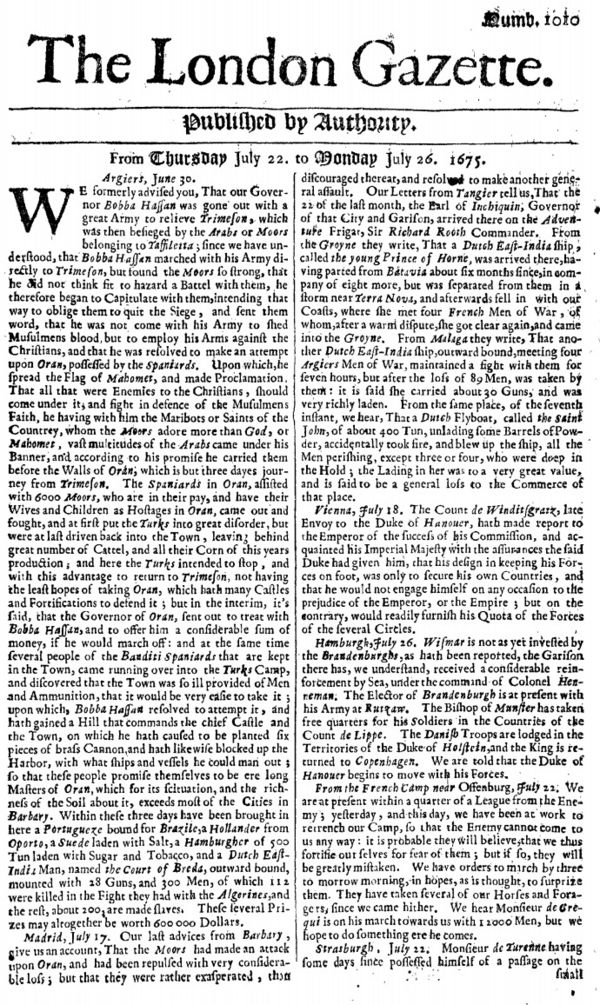
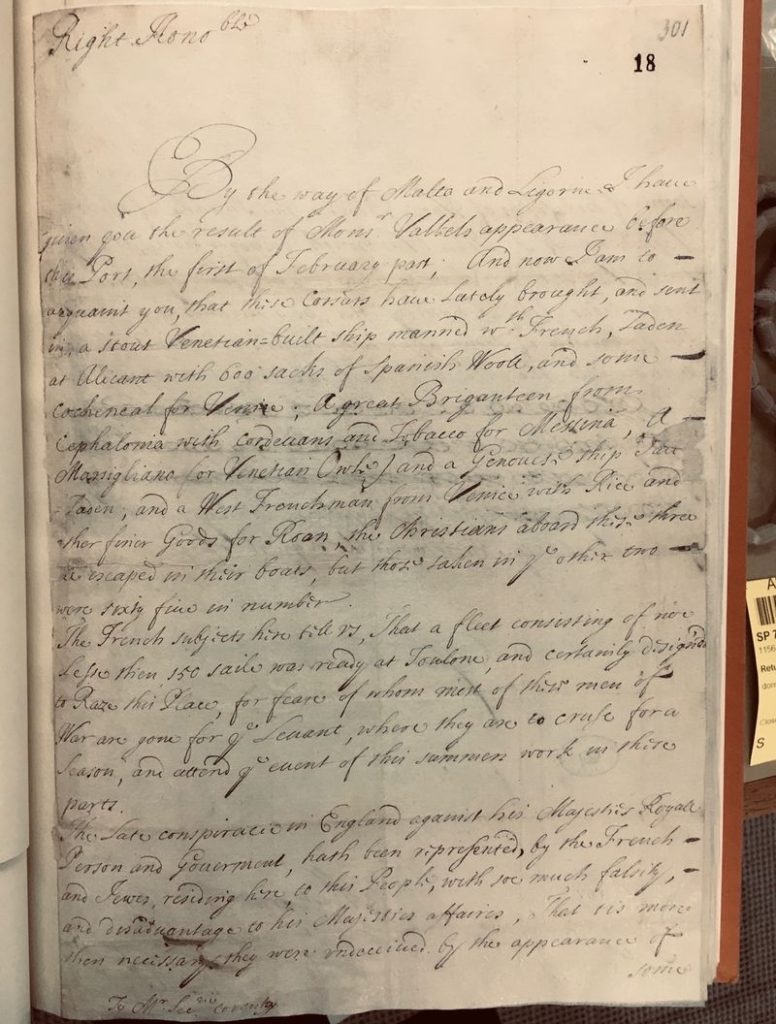
Historians often argue that most early modern British people knew little or nothing true about the Maghreb or its people; informed by fictionalised, polemical, allegorical and occasionally factual accounts, Britons viewed Maghreb as alien, dangerous, undifferentiated and chaotic. As part of my research into British expatriates who lived in the Maghreb (see my first three blog posts), I wanted to understand how true this was for them, and how they might have contributed to changing the narrative at home. I realised that a great way into the information they might have received was to look at periodical news, that is, newspapers. The seventeenth century was time when regular newspapers started to take off in Britain, and these publications were positively devoured by British audiences – more than 30,000 individual issues were published before 1700, and each issue could be hundreds or thousands of copies. While literate, male, middle-class Londoners like my expatriates were a key audience, newspapers were passed between acquaintances and read aloud in public, so the news and views they contained reached a much larger proportion of the British population.