Abraham Lawse (c.1559-1613) – Case Study of a Tudor-Stuart Shipmaster
When I was working on my PhD dissertation on the social history of Elizabethan seamen in the 1990s, I spent a great deal of time combing through High Court of the Admiralty cases, parish records, wills, and whatever else might yield information about the personal and professional lives of late Tudor seafarers. The highest-ranking men in the English maritime community were the most likely to leave a paper trail in the historical records, affording researchers the opportunity to “meet” them at various junctures of their lives: shipmaster Abraham Lawse (c. 1559-1613) was one such man. I first encountered Lawse in parish records from 1584, when he was a young man getting married [...]
Read More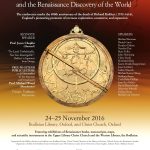
Hakluyt@400 Quatercentenary Programme Autumn 2016
Two free exhibitions will accompany this interdisciplinary conference, both to be launched in October 2016: Hakluyt and Geography in Oxford 1550–1650 at Christ Church, Oxford, and The World in a Book: Hakluyt and Renaissance Discovery, at the Bodleian Library, Oxford. In addition, on Sunday 27 November there will be a commemorative service in All Saints Church, Wetheringsett, Suffolk. Read on for a detailed overview of events! Exhibitions The two free exhibitions in Oxford will run from October to December 2016. On Friday 14 October, Hakluyt and Geography in Oxford 1550–1650 will be launched at Christ Church, Hakluyt's old college, with a symposium on Renaissance scientific instruments and a reception. In November, events at Christ Church will [...]
Read More
How to read Hakluyt’s Principal Navigations (1598-1600)?
MF: For me, one of the great challenges of working on Hakluyt’s collection has been finding productive ways to apply the tools of textual analysis – “literary criticism” – to a work that is not at all a “literary” text (or if it is, only in scattered moments), and which has both many discrete authors and one fairly taciturn editor. My Annual Lecture gave an overview of some lines of approach; I’ll describe a few of them here. Principal Navigations (1598-1600) [Hakluyt Society Extra Series, Nos. 1-12] is organized by geography: each of Hakluyt’s three volumes groups together voyages to particular parts of the globe. Mary Fuller (MIT), Experiments in Reading Hakluyt's Principal [...]
Read More
Author’s View: The ‘Joys’ of editing the Banks Iceland and North Atlantic papers
Editing the Banks Iceland correspondence was a joy – now that it is finished and I look back on the experience. It all began last century when I was at the London School of Economics working on my doctoral thesis on Anglo-Icelandic relations 1800–1820. I was in the Botany Library of the Natural History Museum looking at the Banks Iceland correspondence preserved there. The curator said I must meet Harold B. Carter. Harold was an Australian research scientist who had become interested in Banks – after all Banks is very well-known as "the Father of Australia"; he adorned the $5 bill at the time - and before leaving Sydney for [...]
Read More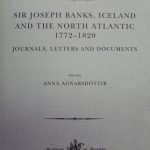
The Series Editor’s View: or, what Hakluyt Society Series Editors do
When and how did you become Hakluyt Society Series Editor? I first became a series editor in 2008, after about a year's apprenticeship as an assistant editor, in which I took on the role of preparing the report for Council on progress with volumes. I already had some experience as an editor of some of the catalogues published by the National Maritime Museum, where I was a curator. Since then I have edited the Society's annual lectures and worked closely with volume editors in preparing travel accounts for publication. I focus on the 18th to 20th centuries, while my fellow series editor, Professor Joyce Lorimer, concentrates on earlier periods. So far [...]
Read More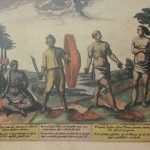
Hakluyt Society Essay Prize 2016: European Conceptualisations of Southeast Asian Sexual Diversity, c. 1590–1640
By Nailya Shamgunova My research focuses on the study of sexual diversity in a transcultural context. The ways in which people from different cultures understood each other’s sexual practices are fascinating. I used Anglophone travel accounts that refer to ‘sodomy’ in Southeast Asia in order to uncover some of the processes through which knowledge of Southeast Asian sexual practices was disseminated and adapted to an Anglophone worldview. I read primary travel accounts alongside other writings referring to sodomy – from medical texts and legal acts against sodomy to new editions of Aristotle and general cosmographies. The broader context of my study is the issue of contact between ‘European’ and ‘non-European’ [...]
Read More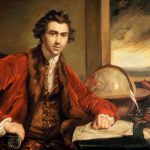
Sir Joseph Banks, Iceland and the North Atlantic 1772-1820
Sir Joseph Banks, Iceland and the North Atlantic 1772-1820: Journals, Letters and Documents, edited by Professor Anna Agnarsdóttir. After the successful Endeavour voyage [Hakluyt Society Extra Series 34], Sir Joseph Banks was due to sail on James Cook’s second voyage to the South Seas. Unhappy with the accommodation, Banks withdrew and sailed with his twenty-strong party to Iceland, thus leading the first British scientific expedition to this remote island in 1772. Thus began Banks’s association with Iceland. This volume contains the Iceland journals of Sir Joseph Banks (1743-1820) – including an account of his ascent of the volcano Hekla – and his servant James Roberts. Secondly, all extant documents regarding [...]
Read More
2015 Hakluyt Society Essay Prize: 2016 results and 2015 winner
By Owain Lawson In September 1922, Abbé Émile Wetterlé arrived at the port of Beirut as part of the French Mandate for Syria and Lebanon’s agricultural commission. In his subsequent publications, he remarked on the astonishment he felt upon seeing for the first time the gentle rangeland of the Lebanese littoral. Steeped in biblical and orientalist representations of Lebanon, Wetterlé expected to see the dense Lebanese cedar forests described in the Bible. The absence of these forests implied to Wetterlé that Ottoman mismanagement and Arab indolence had devastated Lebanon’s natural splendour, and that France must rehabilitate the Lebanese environment. Owain Lawson (right) receiving the inaugural edition of the Hakluyt Society [...]
Read More
Recipients of 2016 Hakluyt Society Research Grants
Professor Daniel Carey (University of Galway) and Dr Gabor Gelléri (University of Aberystwyth) – Ars Apodemica Online – an online database of the arts of travel The work is geared toward the completion of an online database of early modern discussions of the art of travel (the ars apodemica). Prior work by Carey and Gelléri has: significantly increased the number of known texts of this type as compared to existing bibliographies; developed a descriptive methodology; and created the foundation for various visualizations that will benefit users of the database. Scholars of early modern travel have recognized the importance of attempts to reform and direct the practice of travel. The sheer [...]
Read More
Maritime Trade, Travel and Cultural Encounter in the Eighteenth and Nineteenth Centuries
PROGRAMME The Hakluyt Society Conference, Hull, 13-14 November 2015 The Hakluyt Society Conference programme Friday 13 November 2015 9.15 Registration and Coffee 9.45 Welcome (President of the Hakluyt Society) 10.00-12.00 Panel 1: Travel Accounts and Logbooks Chair: Nigel Rigby Paul Sivitz (Idaho State University), ‘Ship Captains and Science: Linking Physical and Virtual Mobilities in the Eighteenth Century’ Natalie Cox (University of Warwick) and Steven Gray (University of Portsmouth), ‘Tales from the “Happy Ships” of Empire: The Westminster Press ‘Log Series’ and the emergence of Naval travel writing, 1883-1910’ Lena Moser (University of Tuebingen), ‘“Totally unfit for an English Naval Officer”: The travels and career of Friedrich Lappenberg of Bremen, Master [...]
Read More